

Program Overview
- Guided road trip to winter Spiti with Kinnaur exploration.
- An adventure of a lifetime – stay at homestays with local families and experience the warm Spitian hospitaity.
- Get a chance to experience snow fall and frozen waterfalls.
We begin this Spiti Valley Winter Expedition by hitting the road from Shimla. We pass through popular town of Rampur-Bushahr before entering the spectacular Kinnaur Valley as we drive to Sangla. With the Baspa river magically weaving itself through the forested slopes, this exquisite 95-kilometer stretch of the Sangla Valley is a sight to behold. Known predominantly for its agriculture, almost every house in Sangla will have cultivations of apples, pears, walnuts, apricots or potatoes in the summers. As you arrive in Sangla in early November, autumn greets you with golden leaves and trees dressed in shades of brown. Gradually, the landscape transforms in a quiet, dramatic shift - until everything is blanketed in pristine white snow.
On the second day of this Spiti Valley Tour, we have breakfast, basking in the first rays of the sun, and later head towards Chitkul. Chitkul can be described as one of the most scenic settlements in the valley and the last inhabited village before the India-China border. This short drive from Sangla to Chitkul will be one of the most scenic drives you’ll take with plenty of opportunities to take stunning photographs. Walk around the Bapsa river and pay tribute to the Mathi Goddess at the temple in the village. After spending time in Chitkul, we turn around and head to Kalpa. Legend has it that Kalpa was the winter home of Lord Shiva. If it’s true, he couldn’t have found a more remarkable abode for himself, with enthrallingly majestic views of the Kinner-Kailash and Jorkandan peaks looming right above the village. Please note that the road to Chitkul, as well as the route to Kalpa, is sometimes prone to closure during winter due to heavy snowfall. Accessibility during this time may vary depending on weather conditions. Overnight at a hotel in Kalpa.
After a comfortable night’s rest at Kalpa, we set off on the famous Hindustan-Tibet Highway. Famed for its spectacular views and proximity to Tibet, this road snakes north into Nako, the last hamlet of Kinnaur district. We have a steaming hot lunch at Nako, before entering the magical Spiti Valley. If road conditions allow, we will also visit the Gue Monastery, known for housing the naturally preserved mummy of a Tibetan monk. We will then spend the night at a comfortable and authentic homestay in Tabo. Overnight at a homestay in Tabo.
We start the day with a visit to the over 1000 – year old Tabo Monastery, UNESCO World Heritage Site. Walk around this sacred site and gain a deeper understanding of Buddhism. Unlike other monasteries in Spiti Valley, the Tabo monastery is located at the bottom of the valley. From Tabo, we drive to the spectacular Pin Valley. Imagine a national park with an abundance of animals and birds, with some rare plant varieties and a river that is frozen. Pin Valley promises all this. We first visit the Kungri Monastery and then the beautiful hamlet of Mudh – the last motorable village of the Pin Valley. Please note that access to Mudh can be affected by weather conditions and the road is occasionally prone to closures. Declared a national park in 1987, Pin Valley has altitudes ranging from 11,000 to 20,000 feet and is home to at least 12 endangered snow leopards. In addition, other animals indigenous to the region and park are the Siberian ibex, bharal, weasel, red fox and marten. Birds such as the pika, griffon, golden eagle, bearded vulture, chukor and raven paint the skies a pretty picture. Overnight at a homestay in Kaza.We start the day with a visit to the over 1000 – year old Tabo Monastery, UNESCO World Heritage Site. Walk around this sacred site and gain a deeper understanding of Buddhism. Unlike other monasteries in Spiti Valley, the Tabo monastery is located at the bottom of the valley. From Tabo, we drive to the spectacular Pin Valley. Imagine a national park with an abundance of animals and birds, with some rare plant varieties and a river that is frozen. Pin Valley promises all this. We first visit the Kungri Monastery and then the beautiful hamlet of Mudh – the last motorable village of the Pin Valley. Please note that access to Mudh can be affected by weather conditions and the road is occasionally prone to closures. Declared a national park in 1987, Pin Valley has altitudes ranging from 11,000 to 20,000 feet and is home to at least 12 endangered snow leopards. In addition, other animals indigenous to the region and park are the Siberian ibex, bharal, weasel, red fox and marten. Birds such as the pika, griffon, golden eagle, bearded vulture, chukor and raven paint the skies a pretty picture. Overnight at a homestay in Kaza.
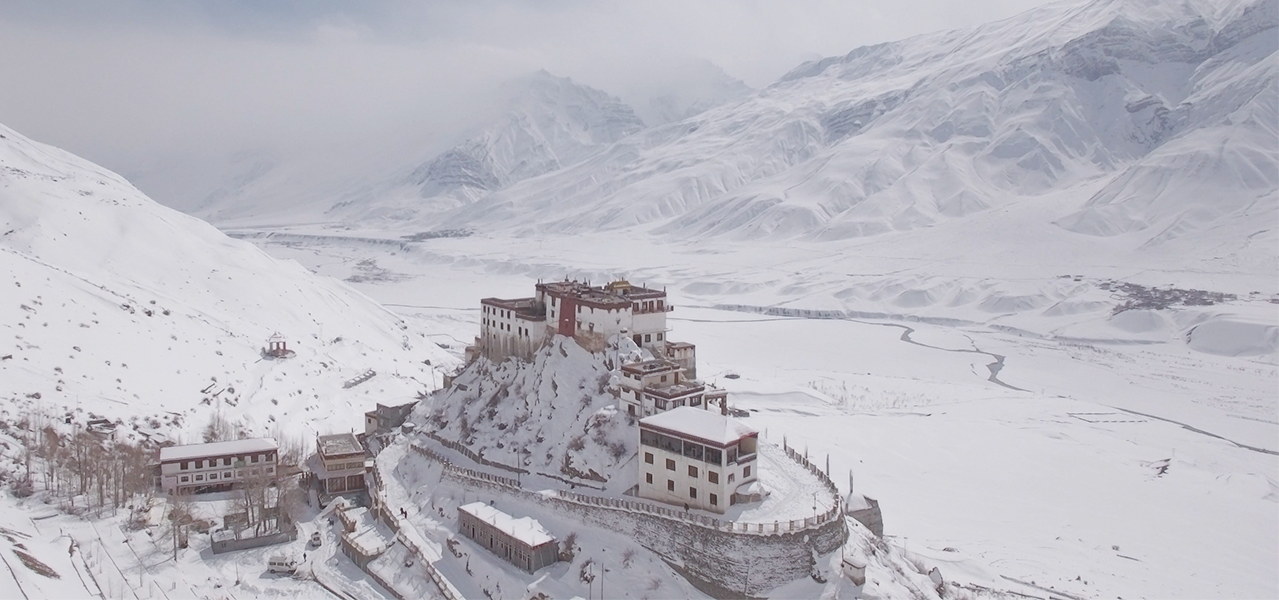
We begin the fifth day, with a drive to renowned Ki Monastery. The car will first stop at the base of the monastery hill for the ultimate photo opportunity of this remarkable structure amid white snow. With over 1000 years’ worth stories to tell, the Ki Monastery situated at a height of 13,668 feet was founded by a disciple of the famous Atisha, in the 11th century CE. Belonging to the Yellow Hat or Gelugpa sect of Tibetan Buddhism, this monastery is famous as a prominent center of learning as well as a refuge for Tibetans. Being remotely located atop a hill overlooking endless plains, the Ki Monastery is an obvious choice for those seeking peace and calm. Then we will move farther up the valley to the picturesque village of Kibber. Located at a height of 4205 meters and 18 km from Kaza, this formerly highest permanently inhabited village in this region, is also a popular base camp to embark on adventure and treks to adjoining mountains of high altitude. The expanses of beautiful landscapes and immeasurable beauty of the snowy mountains make the place a haven for nature-lovers and photographers alike. From Kibber we will head to the famous Chicham bridge - Asia's highest bridge. We will then drive to some of the highest inhabited regions of the world. The highest village in Asia, Komik, which literally translates to ‘eye of a snow cock’, is situated at a height of 4513 meters. This farming village has a population of 84 people, living in utter isolation, mostly cut-off from the rest of the world during this part of the year. If accessible during this tour, we will make the drive to Komik. Some of the common animals of the region are the Tibetan wolf, blue sheep, red fox, hare, snow cock, Himalayan griffin, rock pigeon etc. Later, we drive to Hikkim where we visit the world’s highest post office in the world. If possible, you might even meet the post-master and hear his stories. After sending out a postcard, we drive to Langza. Langza village is situated at an altitude of 4400 meters and belongs to the Sakyapa sect of Tibetan Buddhism. Langza houses a population of 137 in 33 households. Please note that access to Langza is subject to road conditions, especially during the winter months. Once you are here, you can walk around the frosty-white village and visit the ancient Lang (Temple) which is estimated to be around 1000 years old. At Langza, walk back to the prehistoric era when Spiti was submerged by the Tethys Sea, as you explore a land very rich with fossils of Marine animals and plants which were here millions of years ago. Overnight at a homestay in Kaza.
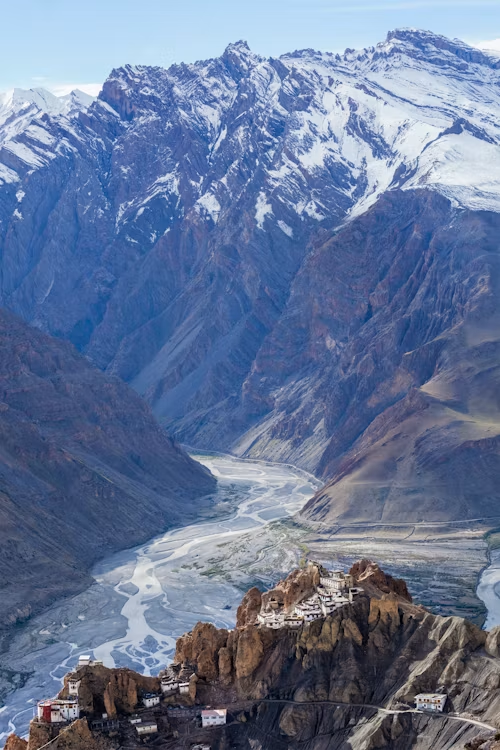
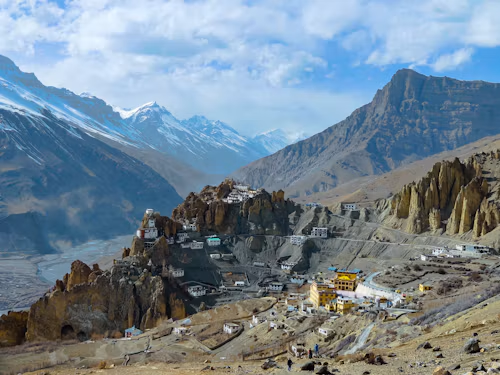
The sixth day marks the beginning of the end of this expedition. We make our way south towards Kinnaur Valley. Along this journey, you can get to capture some scenic views that you might have missed out earlier. Depending on the road condition, we can head to Dhankar and explore the ancient monastery and village here, before heading to Rampur. After a scenic and memorable drive, we will end the journey at Rampur. Overnight stay at a hotel in Rampur.
The last leg of this 7 Day Winter Expedition is here. We drive for Shimla with a bag of delightful memories and exciting stories to recount. From snow-covered trails to cozy evenings, each moment has added to an experience we’ll remember for years to come. We are expected to reach Shimla by 3:00 PM, and all participants will be dropped off near the Tourism Lift Parking area. To ensure a smooth and stress-free conclusion to your trip, we recommend planning your onward travel from Shimla anytime after 7:00 PM on the same day, or even better, the following day. This gives you ample time to relax and reflect on the journey. For those heading toward Chandigarh, you also have the option of hiring a private cab from Shimla. It’s a convenient and flexible way to continue your travels, especially if you’re catching a flight or train from there. Tour ends.
- Hotel Accommodation with breakfast and dinner in Kalpa / Rampur on double sharing basis.
- Homestay Accommodation with breakfast, lunch and dinner at Tabo and Kaza.
- Transfers by Non-AC Force Traveller (14 seater) shared by 10-12 people for all days as per the itinerary (Day 1 - Day 7).
- Reliable, experienced and adept English-speaking local driver cum guide with great knowledge of the area and the terrain.
- Driver charges, driver accommodation, fuel and inter-state toll.
- Any Personal Expenses / Tips / Permits
- 5% GST (Tax)
- Guide / Porters
- Meals in Transit / Lunch in Kalpa or Rampur / Any Beverages / Any meals that are not mentioned in the itinerary.
- Sightseeing in Shimla / Any accommodation, activities or transfers other than what is mentioned in the itinerary.
- Any cost arising out of unforeseen circumstances including medical emergencies and acts of God.
- Anything that is not mentioned in the above list of inclusions.